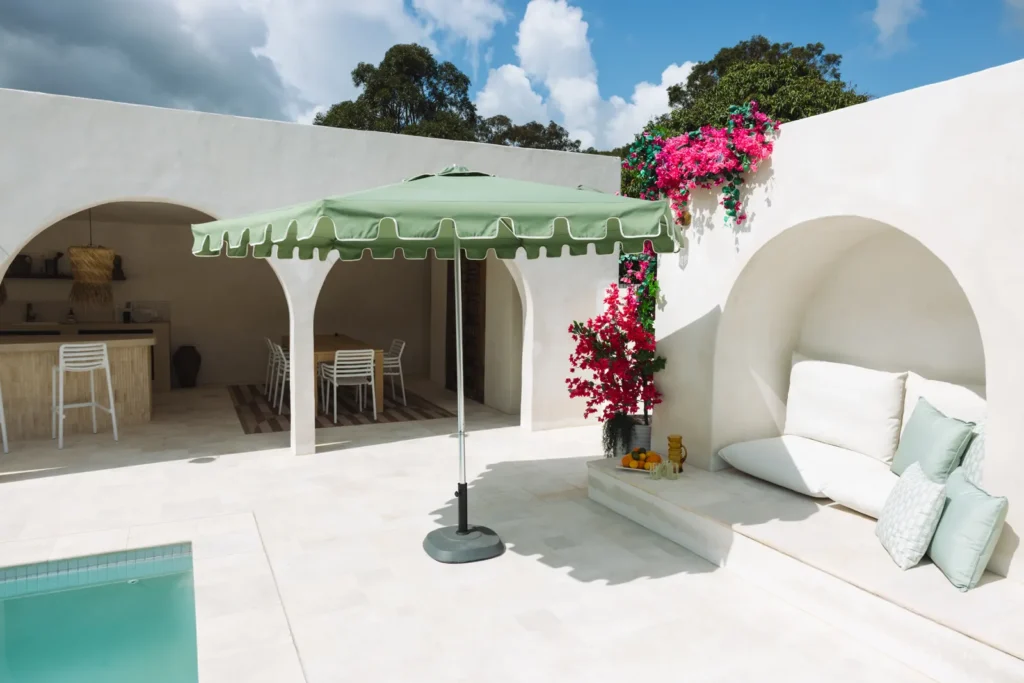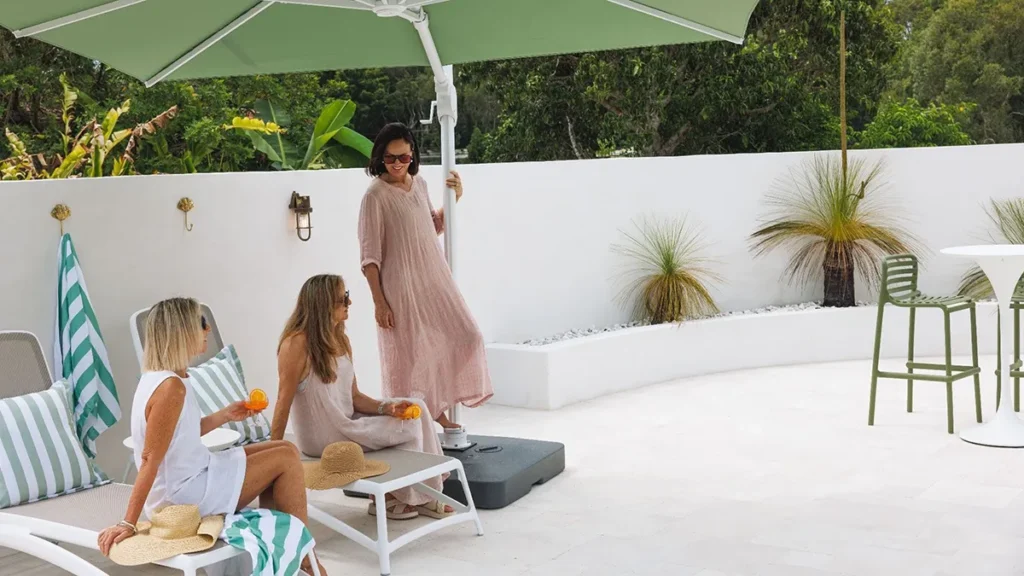
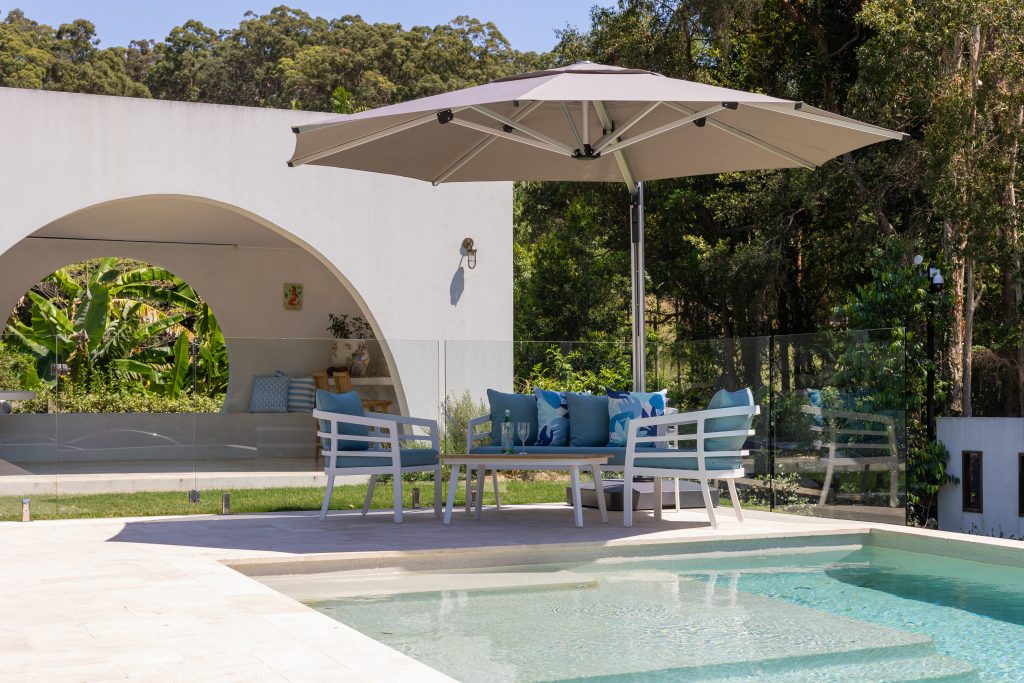
There are more types of umbrella suited to outdoor use than most buyers expect. The two primary types of umbrellas are centrepost and cantilever, with beach, garden and retro designs suited to more specific needs.
The right choice depends on your space, your budget, and the level of wind and sun exposure you need to manage. This guide outlines each type and covers the practical considerations worth reviewing before you buy.
The Main Types of Outdoor Umbrellas
Centrepost Umbrellas
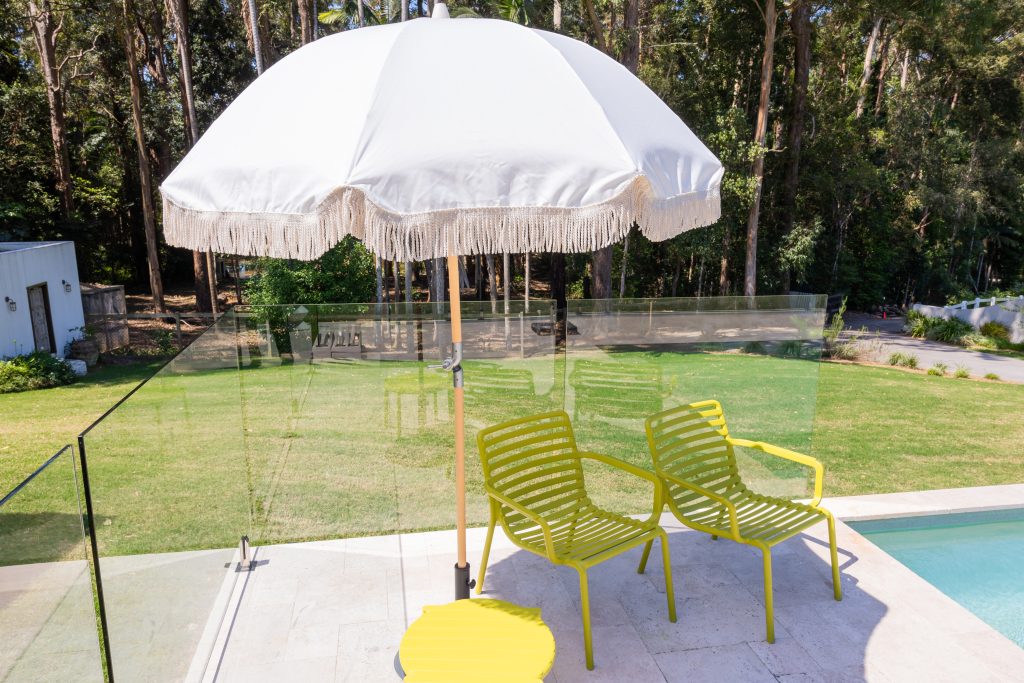
A centrepost umbrella features a single pole running through the centre of the canopy. It is the classic design most people associate with outdoor shading.
Centrepost umbrellas can be positioned through a table with a centre hole, or set on their own base beside a seating area. Their simpler construction makes them a practical choice for patios, balconies and smaller backyards.
Cantilever Umbrellas
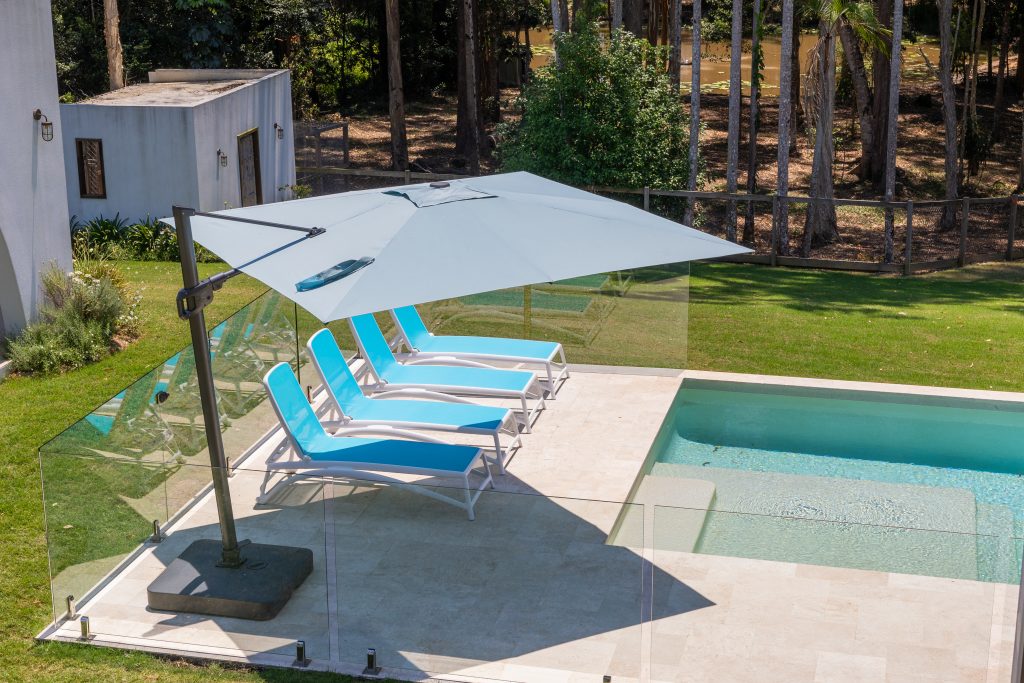
A cantilever umbrella uses a side pole and an extended arm to position the canopy above the space, leaving no post within the seating or dining area. This provides clear, unobstructed shade over a table, lounge or pool deck.
Cantilever umbrellas require a substantial base to remain stable, as the weight is offset to one side. They are well suited to larger outdoor areas where the additional coverage and flexibility are needed.
Beach, Garden and Retro Umbrellas
Beyond the two primary types, several other styles are worth noting:
- Beach umbrellas are lightweight and portable, designed for use in sand rather than a fixed base. They are also a chic look in any backyard or cafe.
- Garden umbrellas are designed to complement softer, more natural outdoor settings.
- Retro umbrellas bring a vintage aesthetic to a courtyard or entertaining area, for buyers seeking character rather than a plain, modern canopy.
You can review our full range of outdoor umbrellas to compare styles directly.
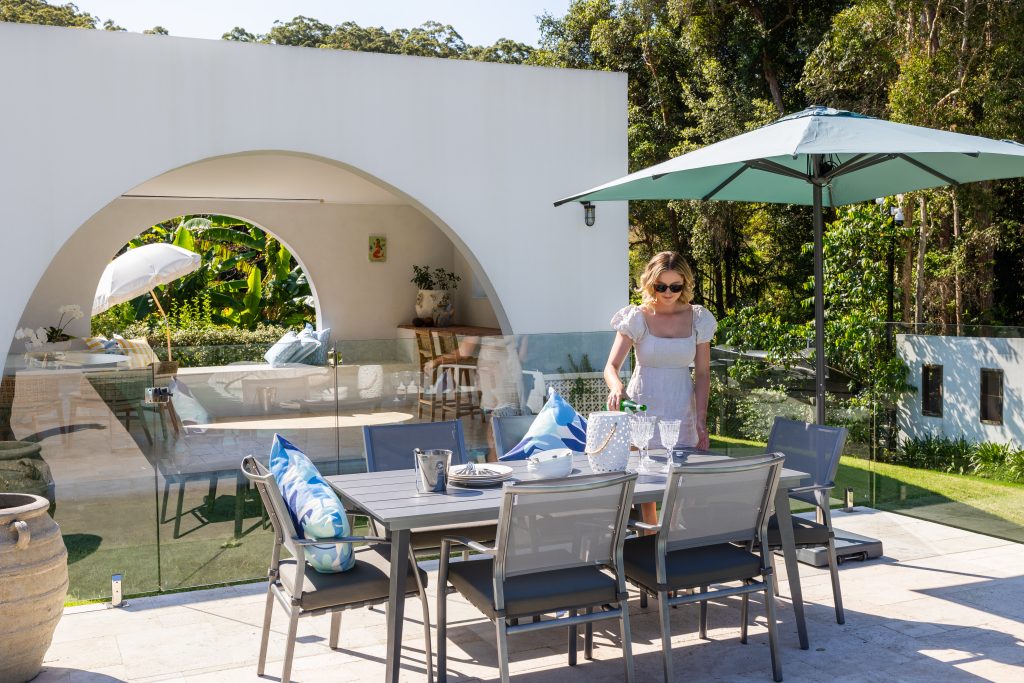
How to Choose an Outdoor Umbrella for Your Space
Once you understand the main types, the next step is matching one to your intended use.
1. Consider Where and How You Will Use It
Begin with the fundamentals. Are you shading a family dining table, a small balcony, or a busy café or restaurant space?
For most homes, a centrepost umbrella on a patio or garden offers classic style without significant expense. Commercial spaces generally require heavier-duty umbrellas built for daily use across larger areas, such as resorts, restaurants or alfresco dining zones.
2. Assess Sun Position and Adjustability
The sun’s position shifts throughout the day and across seasons, meaning a fixed umbrella will not always provide shade where it is needed. Consider the following features:
- Tilt mechanisms allow the canopy to be angled as the sun moves.
- Rotating bases are particularly useful on cantilever umbrellas, allowing shade coverage to be adjusted without relocating the base.
- Height adjustments help clear a tree branch, eave or house structure. On larger centrepost umbrellas, a telescopic pole can also remove the need to shift furniture each time the umbrella is lowered.
3. Account for Obstacles
Assess your space before purchasing. Pool fences, outdoor furniture, trees and walls can all affect where an umbrella can be positioned and how effectively it provides shade.
Planning around these obstacles in advance ensures the umbrella suits the space, rather than competing with it.
4. Wind Resistance and Stability
If your outdoor area is exposed to wind, stability should be a priority. Several features make a meaningful difference:
- A sturdy base or weight system keeps the umbrella secure in breezy conditions. Our guide on what weight of umbrella base you actually need covers this in further detail.
- Wind vents in the canopy allow air to pass through rather than catching beneath it, reducing the risk of tipping.
- Sprung rib ends provide the frame with a degree of flexibility in gusty conditions, rather than requiring it to remain rigid.
For exposed or windy locations, a cantilever umbrella with a reinforced frame, paired with an appropriate base or weight, is generally the more reliable option.
5. Materials and Durability
Outdoor umbrellas are exposed to sun, rain and wind throughout the year, so material quality warrants close attention.
- Frames: Aluminium is lightweight, resistant to rust, and performs well in coastal areas. Timber frames offer an elegant appearance but require additional maintenance.
- Canopies: Sunproof fabrics protect against UV damage and resist fading over time. For a more detailed look at fabric options, our guide to the types of canvas used for outdoor sun umbrellas provides further information.
Quality materials also reduce maintenance requirements. A protective cover when the umbrella is not in use, along with regular cleaning using mild soap and water, will help extend its lifespan.
6. Getting the Size and Shape Right
Size is one of the most common errors in umbrella selection. An umbrella that is too small leaves gaps in coverage, while one that is too large can overwhelm the space.
- Round or octagonal umbrellas suit compact areas, such as small tables or narrow patios.
- Square or rectangular umbrellas provide better coverage for larger dining tables or poolside lounges.
Measure your space before purchasing, and allow clearance around walls, furniture and walkways so the umbrella does not feel confined.
Matching Style to Your Outdoor Space
An outdoor umbrella is a prominent feature of your outdoor area, so selecting a style that complements your surroundings is worthwhile. Neutral tones such as beige or grey tend to suit most existing decor. Bolder colours can add character for those seeking the umbrella to stand out rather than blend in.
Accessories Worth Considering
Several accessories can improve the day-to-day usefulness of an outdoor umbrella:
- Umbrella lights extend outdoor evenings by providing ambient lighting.
- Protective covers shield the canopy and frame from weather when not in use.
- Bases and weights maintain stability and security.
Seeking Expert Advice
If you remain uncertain which type of outdoor umbrella suits your space, it is worth consulting those who work with them daily. At Umbrella Fellas, we have over 40 years of experience in outdoor shading, as a division of our parent company Daydream Leisure Furniture.
We offer a broad range of umbrellas suited to different spaces, budgets and conditions, along with the accessories and bases to complement them.
FAQs
What is the difference between a centrepost and cantilever umbrella?
A centrepost umbrella has a pole through the centre of the canopy, typically positioned through a table. A cantilever umbrella has a side pole and arm, providing unobstructed shade across the entire seating area.
What size umbrella is required for a six-seat table?
This depends on the table’s dimensions, but as a general guide, the canopy should extend at least 60 to 90 cm beyond the edge of the table on each side for full coverage.
Can outdoor umbrellas withstand strong wind?
Many can, provided they are fitted with an appropriate base weight, wind vents and a frame built for stability. Cantilever umbrellas require a heavier base than centrepost styles due to the distribution of weight.
How long do outdoor umbrellas last?
This depends on the materials used, the level of maintenance, and the degree of weather exposure. Using a protective cover and storing the umbrella during storms will help extend its lifespan.
Is professional installation required for an umbrella base?
Most bases and centrepost umbrellas are designed for straightforward installation at home. Larger cantilever setups may benefit from additional assistance, though a professional installer is not usually required.
Ready to Find Your Umbrella?
Whether you require a centrepost umbrella for a quiet patio or a cantilever design for a busy pool deck, selecting the right type depends on your space, conditions and intended use. Explore our full range of outdoor umbrellas or contact us for assistance finding the right fit.