At Umbrella Fellas, our range of umbrella bases and weights covers everything from compact freestanding stands for backyard use to heavy-duty options for commercial settings. Whether you have a centrepost umbrella or a cantilever, there is a base in this collection built for it.
Browse the range below to find the right base or weight set for your umbrella. Each product includes specifications to help you match the base to your umbrella pole diameter and canopy size. If you have questions, our team is available to help you work through the options.
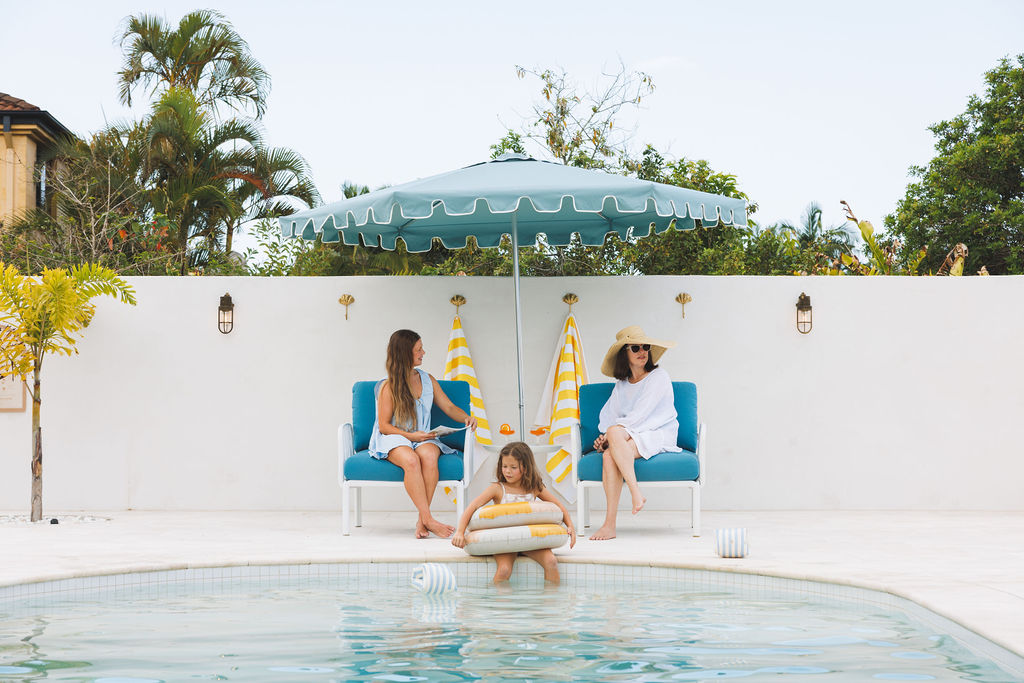
Think of the base as the foundation of your shade setup. A well-matched outdoor umbrella base keeps the pole stable, prevents tipping in windy conditions and protects both the umbrella and anyone nearby. Choose one that is too light for your canopy size, and you introduce risk. Choose one that does not fit your pole diameter, and you will have ongoing wobble and wear.
Matching your base to your umbrella comes down to a few key factors: the type of umbrella you have, the size of the canopy, where it will be used and whether it needs to be moved around or stay in a fixed spot. Getting these right means your umbrella stays put from the first warm weekend of the season through to the last.
Our collection includes several base styles, each suited to different setups and requirements.
A freestanding base is the most common choice for backyard and patio setups. It sits on the ground without needing to be attached to a table or fixed to a surface. Freestanding outdoor umbrella stands work well with centrepost umbrellas used poolside, in alfresco dining areas or in open garden spaces.
If you like to move your umbrella around to follow the shade or rearrange your outdoor furniture, a wheeled base is worth considering. Roller bases allow you to reposition the umbrella without lifting the full weight of the stand. They are a practical choice for patios, pool decks and alfresco areas where the layout changes regularly.
Wheeled bases are still heavy enough to provide stability when stationary. The wheels typically lock or tuck out of the way when the umbrella is in use.
Cantilever umbrellas place the pole to the side rather than through the centre of the canopy, which means the base must work harder to counterbalance the offset load. A standard centrepost base will not do the job here.
Dedicated cantilever bases are designed to accommodate this load distribution. They typically use a cross or L-shaped footprint and are considerably heavier than standard freestanding bases. Some cantilever setups use weight plates that can be stacked to reach the required ballast. If your cantilever umbrella came with a base, additional weights can often be added to improve performance in windier conditions.
For more on selecting the right cantilever for your space, read our guide here.
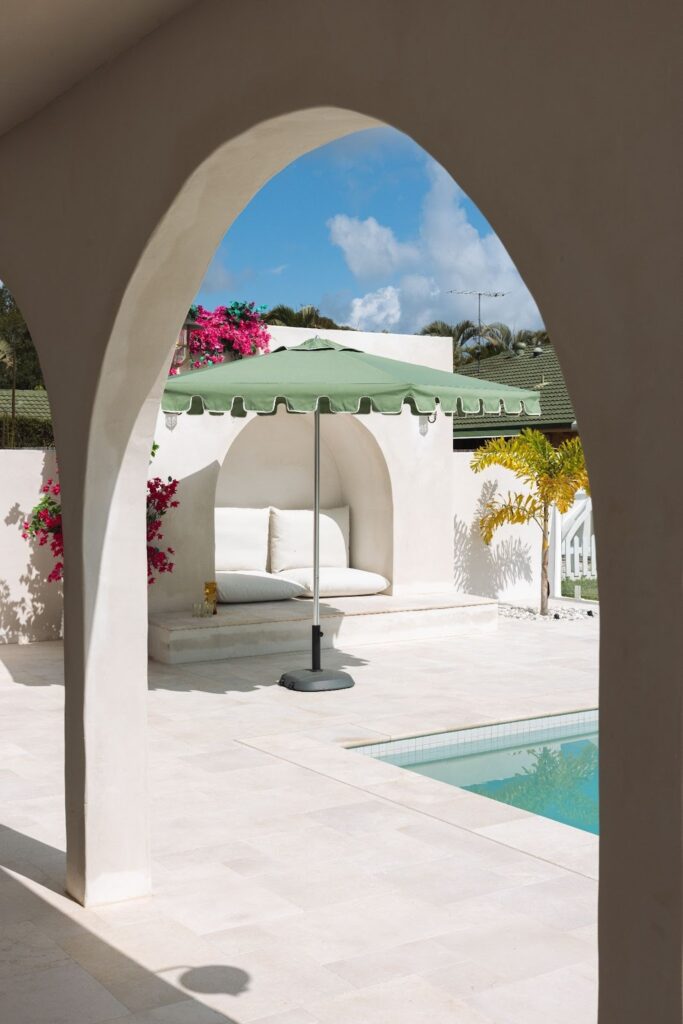
With several base options available, the right choice depends on a few practical considerations.
If you are unsure which base suits your setup, our team is happy to help.
Before purchasing an umbrella, it is essential to consider several important factors. Watch our short video to gain a comprehensive understanding of the intricacies involved in selecting the perfect umbrella.

Before purchasing an umbrella, it’s essential to consider the following questions.
An umbrella is a fragile item by nature, and even a quality umbrella can suffer wind damage. Selecting an outdoor umbrella with the structure best suited to your location and use is crucial. It is then important to secure your umbrella with the correct base and weights. Always consider how much wind your area experiences, and wind your umbrella down whenever it is not in use.
Each outdoor umbrella on our website has recommended bases and weights, which is the best place to start. The right weight depends on the size and style of your umbrella and how much wind your area experiences. If your outdoor area is particularly windy, you may need more weight or a different base than recommended. If you are unsure, contact us to discuss your space.
Cantilever umbrellas need considerably more weight than centrepost umbrellas of a similar size, because the base must counterbalance a canopy that sits off to one side. Use the recommended bases and weights listed for your umbrella, and add more weight for exposed or windy locations.
Each outdoor area should be assessed by how sheltered on windy it is, and the amount of weight required will depend upon this assessment. Whilst a 100kg may be sufficient in one location, 200kg may be necessary in another location.
No, umbrella bases are not universal. Bases are made to suit particular pole diameters and umbrella styles, and cantilever umbrellas need bases designed specifically for them. Check the pole diameter of your umbrella and the recommended bases listed on its product page, or contact us to confirm compatibility.
A wobbly umbrella is usually caused by a pole that is loose in the base, a base that is too light, or an uneven surface. Tighten the base’s securing knob or fittings, check that the base suits your pole diameter, and place it on a level surface. If the umbrella still moves, add weight or upgrade to a heavier base.
A cantilever base can be concealed with planter boxes or by positioning it beside garden beds or furniture, provided the base remains level, stable and easy to access. Never remove weights or reduce the recommended weight to make the base less visible.