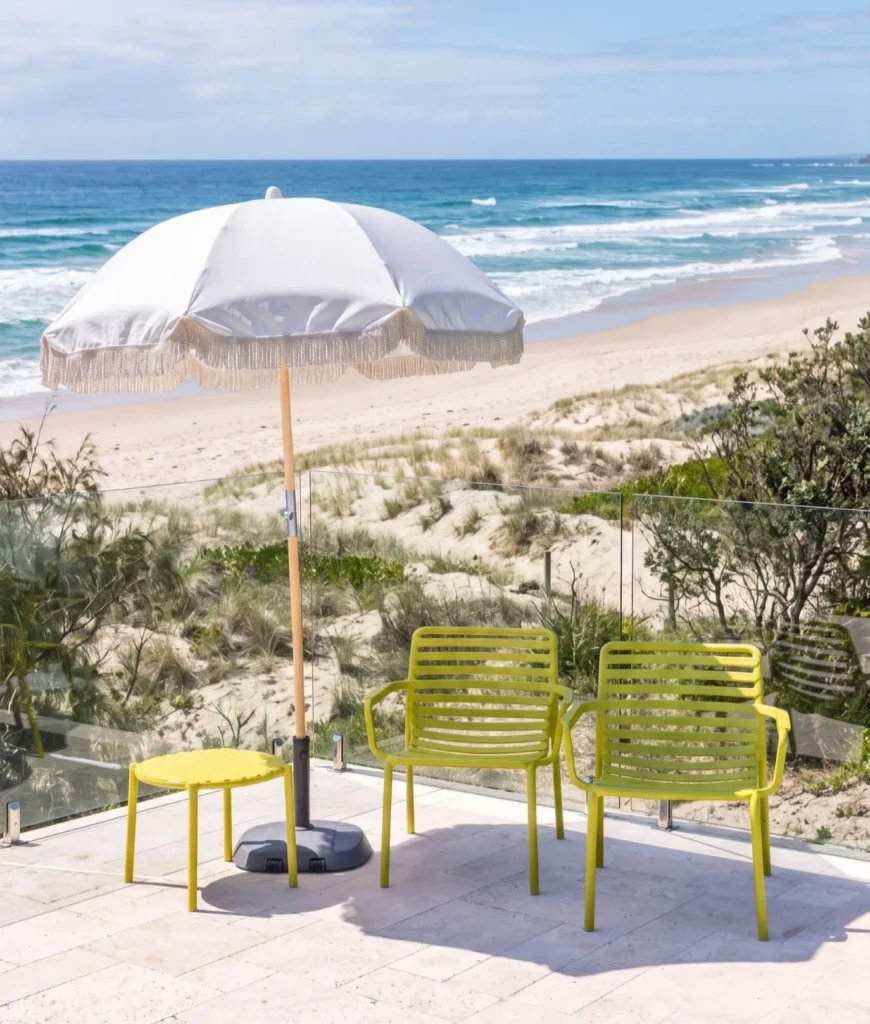
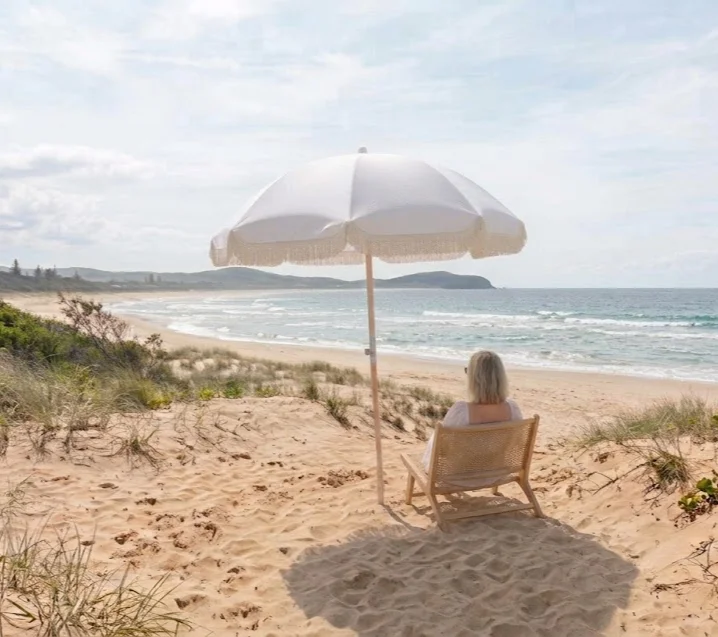
The best beach umbrella in Australia blocks almost all UV, stays anchored in the sand and is light enough for one person to carry. It should also shade your group without taking over the beach. This guide explains what to look for, how to set up a beach umbrella in the wind, and when a beach tent is the better choice.
Meet the Noosa Beach Umbrella
At Umbrella Fellas, our beach range is built around one model: the Noosa Beach Umbrella.
It has a 2m canopy, a timber pole and fibreglass ribs. Its fabric has been tested by ARPANSA, the national agency for UV safety. Below, we compare it against the features that matter most on an Australian beach.
Noosa Beach Umbrella at a Glance
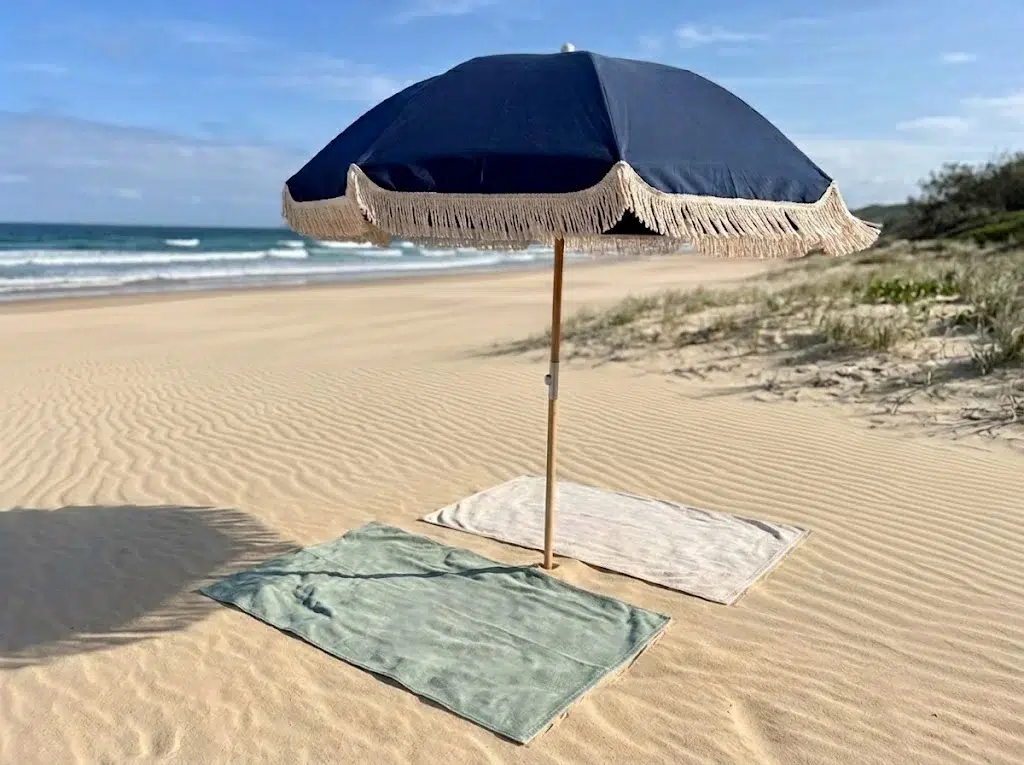
The Noosa comes in two canopy colours, Navy and Salt. Both share the same frame and features. The only difference is the UV result for each fabric.
| Feature | Navy | Sale |
|---|---|---|
| UV protection (ARPANSA tested) | 99% UVE, Most Effective | 99% UVE, Most Effective |
| Canopy diameter | 200cm | 200cm |
| Canopy fabric | Poly/cotton with tassel fringe | Poly/cotton with tassel fringe |
| Pole | 32mm responsibly sourced timber | 32mm responsibly sourced timber |
| Ribs | Fibreglass | Fibreglass |
| Tilt and fold | Aluminium hinge | Aluminium hinge |
| Sand anchor | Fluted sand spike | Fluted sand spike |
| Weight | 4.5kg | 4.5kg |
| Included | Matching carry and storage bag | Matching carry and storage bag |
| Price | $199 | $199 |


Shop the Noosa Beach Umbrella in Navy or the Noosa Beach Umbrella in Salt.
What to Look for in the Best Beach Umbrella
Five features separate a good beach umbrella from one that lasts a single summer. Check each one before you buy.
UV Protection
Beach umbrella UV protection is the first thing to check. Shade fabric is often rated by UVE, which shows the percentage of UV radiation the fabric blocks. Clothing and many imported umbrellas use a UPF rating instead.
If you are searching for the best rated beach umbrella, look for an independent test result rather than a marketing claim. The Noosa fabrics were tested by ARPANSA. Navy blocks 99% of UV and Salt blocks 97%, and both are rated Most Effective. You can read more in our ARPANSA shade fabric testing policy.
Size and Shade Coverage
A bigger canopy gives more shade, but it also catches more wind and weighs more. Most families look for the best big beach umbrella they can still carry from the car park.
The Noosa has a 200cm canopy. This suits 2-3 people. For a larger group, two umbrellas set side by side are often easier to manage than one oversized canopy.
Weight and Portability
You will carry your umbrella across soft sand, often with a bag, chairs and an esky. A matching carry bag makes this much easier and keeps sand out of the car.
The Noosa weighs 4.5kg and comes with its own carry and storage bag.
Frame and Materials
Salt air and sun are hard on beach gear. Fibreglass ribs bend under pressure and spring back, where cheaper metal ribs can bend out of shape. A timber pole adds strength and a classic look.
Tilt Function
The sun moves across the sky all day. A tilt function lets you angle the canopy to follow it without pulling up the umbrella. The Noosa uses an aluminium hinge to tilt and fold.
Best Beach Umbrella for Wind in Australia
No beach umbrella is windproof. The best beach umbrella for wind is one that anchors firmly, flexes in gusts and is set up correctly. Setup matters as much as the umbrella itself.
Features That Help in the Wind
A fluted sand spike: The grooves grip the sand as you twist the spike in, so it holds better than a smooth pole. The Noosa uses a fluted spike designed to anchor deep into the sand.
Flexible ribs: Fibreglass ribs bend with a gust instead of snapping.
A sensible canopy size: A very large canopy acts like a sail. A 2m canopy gives good shade without catching as much wind as an oversized model.
A tilt function: Tilting the canopy lets the wind pass over it rather than lifting it from underneath.
How to Set Up a Beach Umbrella in the Wind
- Check the wind direction before you open the umbrella.
- Twist the spike into the sand with a rocking motion until it sits at least 45-60cm deep.
On particularly windy days, use good judgement and keep beach umbrellas closed, as even a well-anchored umbrella can become a safety hazard in strong gusts. - Pack wet sand firmly around the base of the spike.
- Open the canopy and tilt it so the top faces into the wind.
- Close the umbrella if gusts start to lift or rock it.
For more detail, see our step-by-step guide to installing a beach umbrella in the sand.
Beach Umbrella vs Beach Tent: Which Is Better?
A beach umbrella suits most couples and small families who want quick, open shade. A beach tent suits people who need shelter on several sides, such as parents with a sleeping baby.
Shop the Noosa Beach Umbrella in Navy or the Noosa Beach Umbrella in Salt.
| Beach umbrella | Beach tent | |
|---|---|---|
| Setup | One pole and one canopy | Several poles, pegs or sand pockets |
| Airflow | Open on all sides, so it stays cooler | Enclosed sides can trap heat |
| Shade | Overhead, and moves with the tilt | Overhead and on the sides |
| In the wind | Can be tilted or closed quickly | Larger surface area to secure |
| Portability | One bag over the shoulder | Often a larger, bulkier pack |
| Best for | Relaxed days, couples, small groups | Babies, long days, privacy |
In the beach tent vs umbrella debate, there is no single winner. Think about who is coming, how long you will stay and how exposed your local beach is. Many families bring an umbrella for the adults and a small tent for the children.

Using Your Beach Umbrella Beyond the Beach
No beach umbrella is windproof. The best beach umbrella for wind is one that anchors firmly, flexes in gusts and is set up correctly. Setup matters as much as the umbrella itself.
Caring for Your Beach Umbrella
Salt and sand wear down any umbrella over time. A little care after each trip keeps it working for longer.
- Shake out sand before you close the canopy.
- Rinse the frame and spike with fresh water to remove salt.
- Let the canopy dry fully before you put it in the bag.
- Store it out of direct sun between trips.
For a full routine, read our guide on how to clean an outdoor umbrella frame and fabric.
Frequently Asked Questions
What size beach umbrella do I need for a family?
A 2m canopy like the Noosa suits 2-3 people. Larger families often use two umbrellas side by side. This gives more shade and is easier to manage in the wind than one very large canopy.
Do I still need sunscreen under a beach umbrella?
Yes. Sand and water reflect UV, so some still reaches you in the shade. Use your umbrella alongside sunscreen, a hat and sunglasses.
Is it safe to use a beach umbrella on a windy day?
In light to moderate wind, a well-anchored umbrella with the canopy tilted into the breeze will usually hold. If gusts start to lift or rock it, close it straight away. A loose umbrella can injure people nearby.
Can I use a beach umbrella in my backyard?
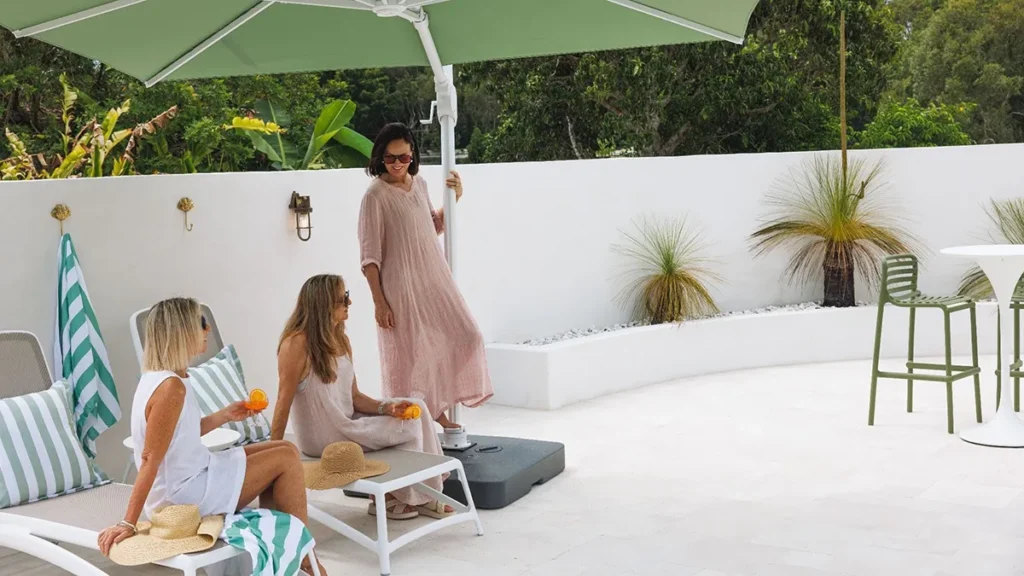
Yes. The Noosa works well by the pool, on a patio or in the garden. Use a base or weight on hard surfaces, as the sand spike is designed for sand.
Find the Right Beach Umbrella for Your Summer
The best beach umbrellas in Australia combine tested UV protection, a secure anchor and a size you can carry. The Noosa Beach Umbrella offers all three, in Navy or Salt.
Browse our beach umbrellas or contact our Sunshine Coast team for advice. With over 40 years of experience, we can help you choose shade that suits your beach.
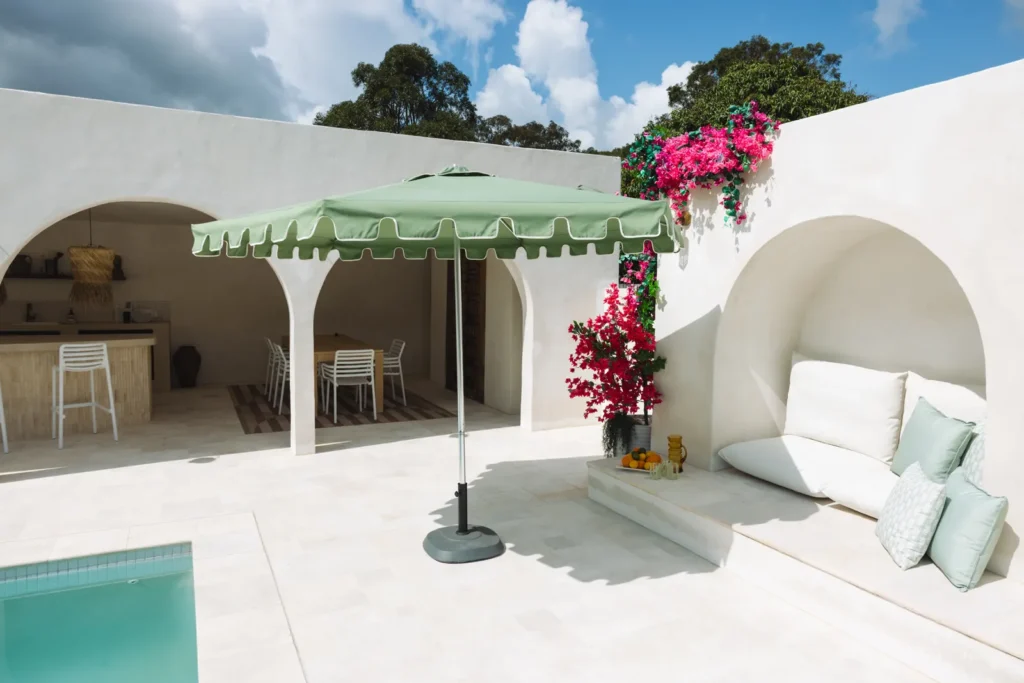
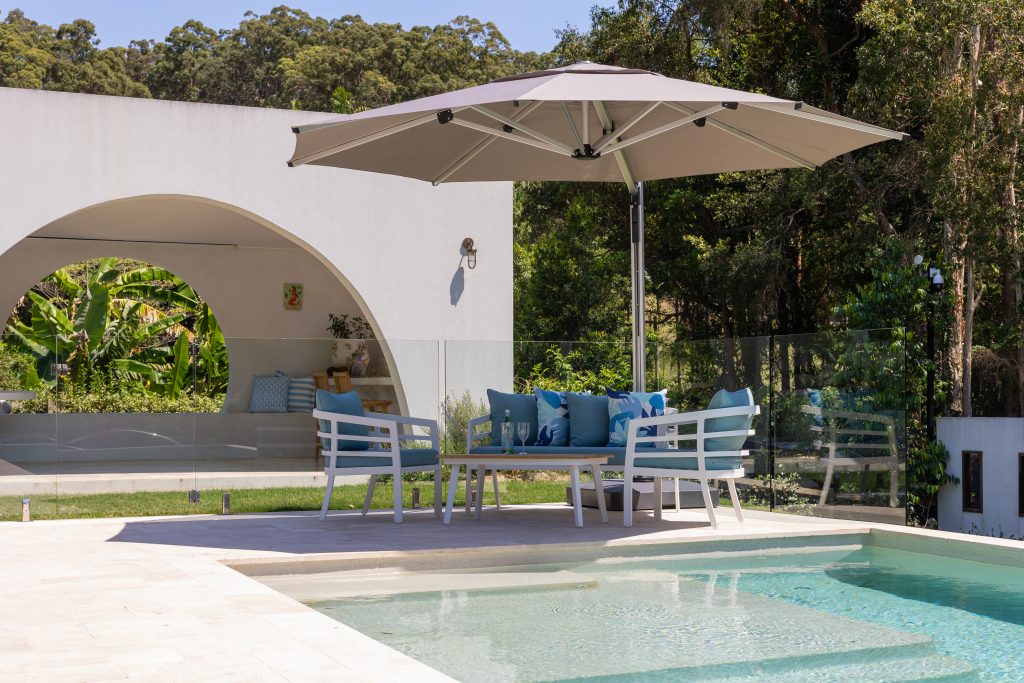
Shading your home as well? Read our best cantilever umbrella guide or our guide to how to choose an outdoor umbrella.